Water Heater Leak Cleanup in Cherry Hills Village, CO
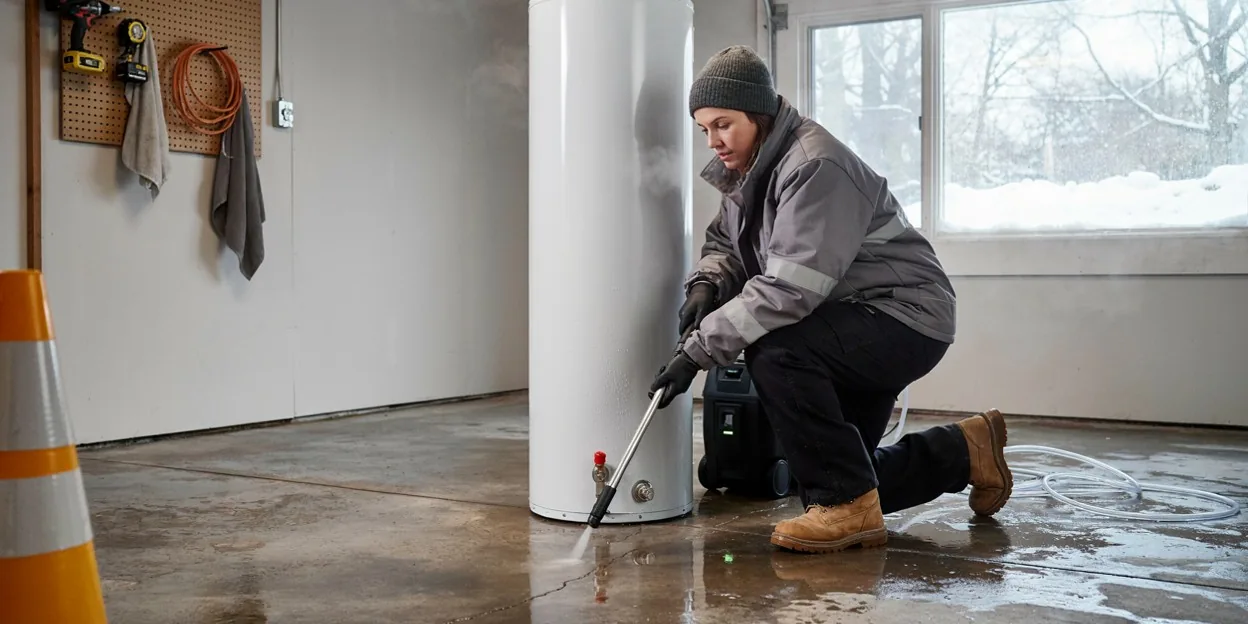
The shower went cold on a Tuesday morning, and when you went down to the mechanical room the two 75-gallon tanks that serve the house were standing in an inch of water that had already run under the door and across the carpet of the finished basement next to them. A tank that has been quietly rusting from the inside for twelve years does not leak slowly when it finally goes. This site puts you through by phone to an independent local provider who cleans up after water heater failures in Cherry Hills Village and across Arapahoe County.
Working out how far the water traveled from the tank
The crew starts at the tank: whether it is still leaking, whether the cold supply to it has been closed, and whether the water reached the furnace, the boiler, or the electrical panel that usually share the room. Then they follow the water. Mechanical rooms in these houses are rarely finished, but the rooms around them are, and water runs under the door and under the wall into carpet, hardwood, or the tile of a basement bathroom. They meter the base of every wall in the mechanical room and the rooms it touches, and they lift the carpet next door to check the pad.
A tank in a garage closet or on a main-floor utility room is a different path: water runs to the garage slab and out the door, or under the wall into a mudroom or kitchen, and sometimes down into the basement through a floor penetration.
Close the cold supply, kill the power to the tank, keep the water off the furnace
Find the valve on the cold line at the top of the tank and close it; that stops new water. If the tank is electric, turn off its breaker; if it is gas, turn the gas valve on the tank to off. Do not stand in water to do either if the panel or an outlet is nearby. If water is running toward the furnace or the boiler, shut those off too. Move whatever is stored in the room up and out. Photograph the tank, the floor, and the rooms the water reached. Then call. The plumber replaces the tank; the cleanup crew dries the room.
The slab dries; the carpet next door depends on the pad
A concrete floor in a mechanical room dries on its own once the water is off it and air moves across it. Carpet in the adjoining room comes up and the pad usually goes; the carpet itself often returns once it has dried. Drywall that wicked water at the bottom is metered and the wet foot or two comes out if it stood in water for more than a few hours. Stored items in cardboard usually do not survive; items in plastic bins usually do. Once the wet material is gone, structural drying runs equipment until the readings match a dry wall upstairs.
When the water crossed into a finished family room or guest suite, the job becomes a basement flooding cleanup, with every wall on the level metered. When the tank sat on an upper floor and the water came down through a ceiling, it is handled with the same top-down approach as burst pipe water damage.
Why the tank in a Cherry Hills basement fails big
Houses on these acre lots use a lot of hot water, and many run two or three tanks, or a tank plus a boiler-fed indirect heater, in a basement mechanical room. Denver's water is hard, and the mineral scale that builds up in a tank shortens its life; ten to twelve years is a normal span here, and a tank that has gone fifteen is living on borrowed time. When the bottom of a 75-gallon tank finally gives, everything in it hits the floor at once, and the cold supply keeps feeding it until someone closes the valve.
In the 1950s and 1960s ranches, the mechanical room is often in the middle of the basement, so the water has finished rooms on three sides. In the newer custom homes, it is usually against an outside wall under the garage, so the water runs toward the theater or the wine room. Either way, a floor drain that is clogged or was never installed turns a tank failure into a whole-level job.
A tank that ruptured is usually treated as sudden damage under a homeowner policy; the tank itself is often not covered, and a tank that had been dripping for months is sometimes argued about. This site cannot say what yours does. Have the crew document the tank's condition, the date, and the first readings in each room.
What to say about a tank that gave out
Say where the tank is, whether the supply to it is closed, which rooms the water reached, and whether the furnace, boiler, or panel got wet. Mention carpet or hardwood next door. Call (720) 807-5901.